 Eric Joern
The Automotive Repair Shop Chart of Accounts: Start Simple, Then Build
I’ve seen automotive repair shop charts of accounts with 50 accounts. I’ve seen them with 500. And here’s the problem: More detail does not...
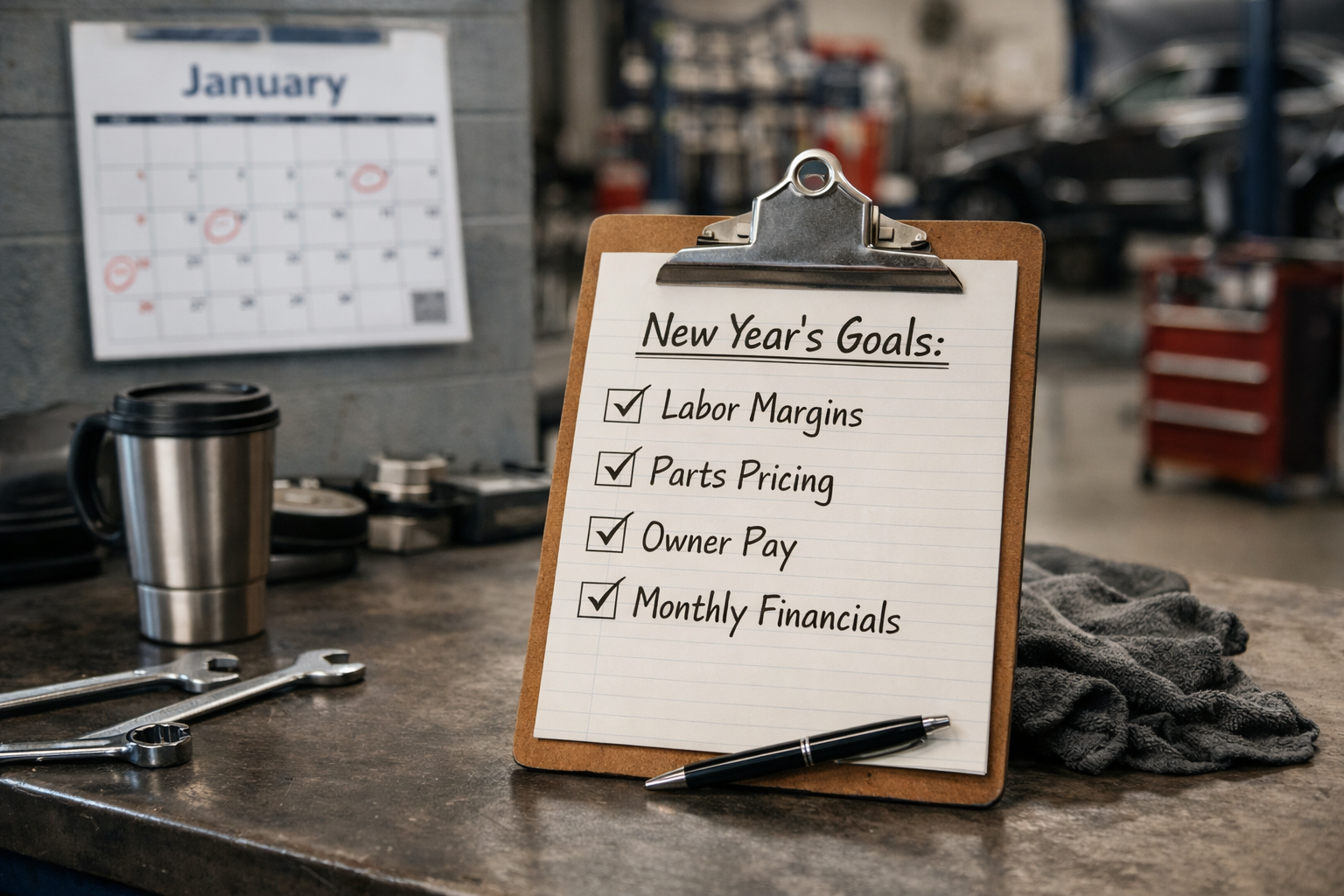
Every January, the same resolutions show up everywhere: eat better, stress less, save more money, work on yourself.
Auto repair shop owners make those same promises. And when you run a business, those resolutions often apply to the shop as much as they do to your personal life.
In many shops, the work is there, but the numbers don’t tell a clear story. Labor and parts get blended, margins take the hit, and money-saving opportunities are missed.
And when that happens, motivation isn’t the problem. Systems are.
Below are a few classic New Year’s resolutions, written for auto repair shop owners who want cleaner books, a more profitable shop, and financials that actually help them run the business.
Getting in shape starts with consistency and accountability. For your shop, that means disciplined bookkeeping and reliable financial reporting.
Too many shops are busy but broke. The bays are full, the phones keep ringing, but margins are thin, and surprises seem to show up every month.
This isn’t paperwork. It’s profit protection.
Yes, this resolution sounds personal, but for shop owners, mental clutter often comes from inconsistent processes and unclear numbers.
When your shop runs on memory, not your systems, decisions feel heavier than they should, you chase profits instead of managing them, and every month feels like a fire drill
When financial processes run smoothly, stress drops. The business becomes predictable and predictable businesses are easier to run.
Most shop owners treat their own pay like an afterthought… “whatever is left at the end of the month.” That approach creates unnecessary stress and inconsistent cash flow.
With the right framework in place and guidance from someone who understands the auto repair industry:
Owner pay becomes predictable
Tax surprises stop happening
Cash flow becomes a tool, not a stressor
If you only pay yourself when there’s “something left,” you’re not managing money. You’re guessing. Intentional owner pay turns cash flow into a plan instead of a surprise.
Too often, shop owners stay involved in bookkeeping tasks that could be delegated or systematized, and make pricing decisions without clear financial reports to guide them.
Personal growth as a shop owner isn’t about doing more.
It’s about spending your time where it actually moves the needle.
Strong relationships reduce friction. And friction quietly costs money.
In a shop, unclear expectations often show up as:
Clear communication around numbers leads to better decisions—and better decisions lead to better profits.
Under every resolution above is one simple truth:
You don’t want more busywork.
You want control.
You want financials that help you make decisions, not reports that sit untouched. You want to understand where the money is going and how to keep more of it.
These aren’t fluffy goals. They’re practical steps toward a more profitable, less stressful auto repair business.
Turning these resolutions into reality takes systems you can rely on and support from a team that understands how shops actually run.
If your financials aren’t helping you price confidently, pay yourself consistently, or spot problems early, it may be time to work with a CPA who specializes in auto repair shops.
We help shop owners:
Clean up and stabilize their books
Track profitability using KPIs that actually matter
Use financials to guide pricing and labor decisions
Plan for taxes year-round, not just at filing time
Want your numbers to work as hard as you do?
Real advice. No BS. Because staying busy isn’t the goal. Being profitable is.

Kaizen CPAs works with auto repair shops across the country. We know running a successful shop takes more than keeping the bays full. We help shop owners understand their numbers, stay ahead of taxes, and build stronger, more profitable businesses. Auto repair is at the heart of what we do, but we bring the same practical, hands-on approach to businesses in other industries, too.
YPD HCM is part of the Kaizen CPAs family. YPD HCM helps small businesses manage payroll, HR, and compliance with the right tools and personal, human support—from payroll and tax filings to onboarding, employee management, and more. It’s practical help for the people side of your business, from a team that’s there when you need them.
The information in this article is provided for general educational purposes and reflects conditions as of the publication date. It is not legal, tax, accounting, payroll, HR, or compliance advice. Every business is different, so talk with a qualified professional about your specific situation.
.png)
I’ve seen automotive repair shop charts of accounts with 50 accounts. I’ve seen them with 500. And here’s the problem: More detail does not...

One of the biggest questions after the memorandum came out was simple: now what? The answer came fast. Within two days, the EPA issued guidance...

President Trump did not sign the REPAIR Act. He signed a memorandum called Freedom to Fix, directing the EPA to review how it handles...