.png) The Kaizen Team
The Kaizen Team
How Auto Repair Shops Can Use AI to Boost Profits and Efficiency
AI in the shop can sound like a robot running the front counter. But that’s not where the value is right now, and it probably isn’t where it should...
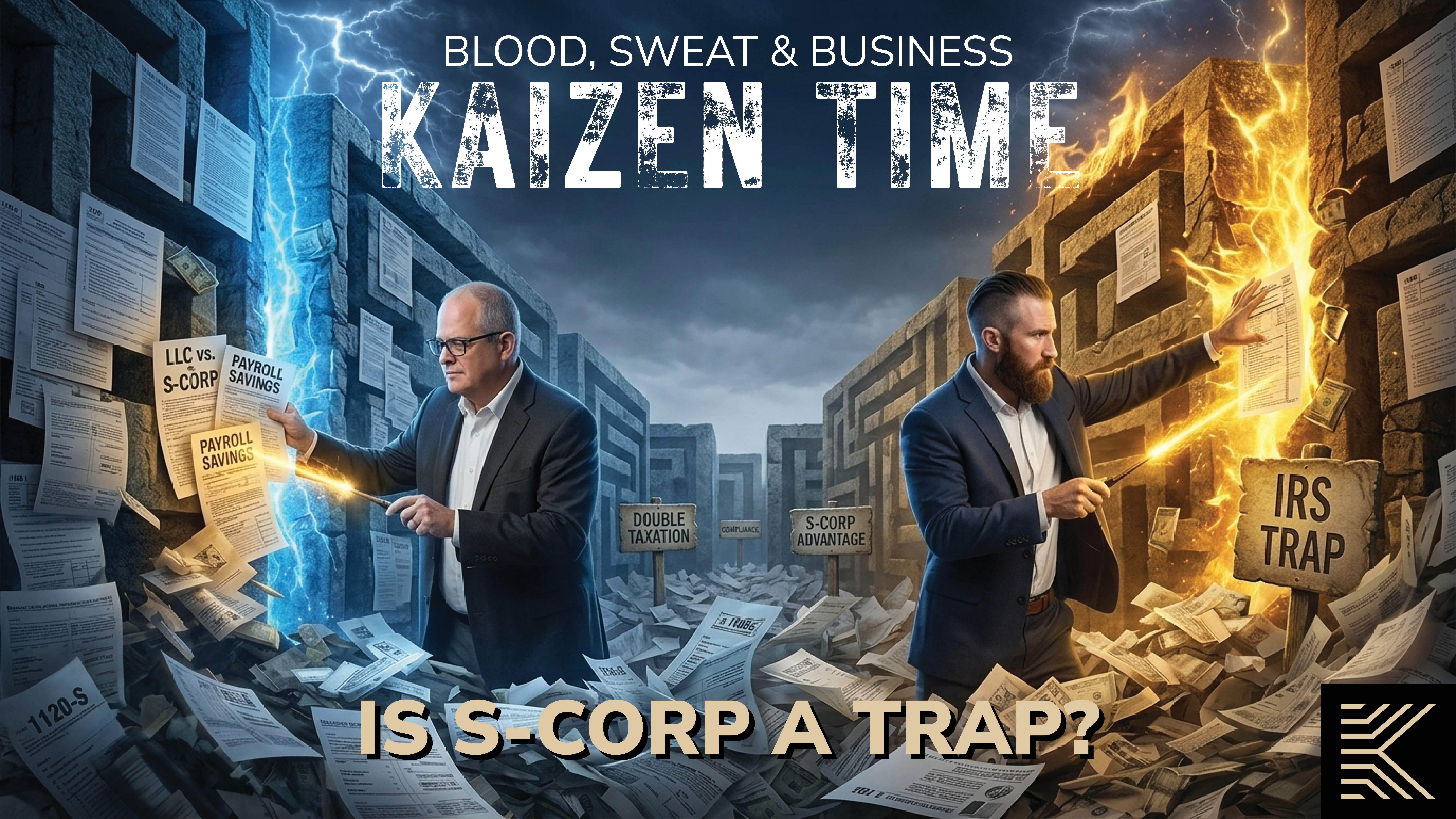
Choosing the right business structure sounds simple until you’re the one making the call. You hear “you should be an S corp,” but no one really explains when it actually makes sense or what can go wrong.
In this conversation, Pierre walks through how S corps actually work, how they compare to LLCs and partnerships, and where the real tax advantages come from.
An S corporation isn’t a different type of business entity you form at the state level. It’s a tax election.
At a high level, a corporation or LLC elects to be taxed as an S corp. The business still files a tax return, but it does not pay its own income tax. Instead, that income flows through to the owner’s personal return.
That’s why S corps are often grouped with LLCs and partnerships. From a tax perspective, they’re all pass-through entities. But how they operate in practice is where the differences start to matter.
On the surface, S corps and partnerships can look similar. Both pass income through and avoid corporate-level tax. The difference shows up when you start taking money out of the business.
With an S corp, distributions must follow ownership. If you own 50 percent of the company, you take 50 percent of the distributions. If you own 25 percent, you take 25 percent. There isn’t flexibility here.
If that rule is broken, you can create a second class of stock, which can terminate your S corp status and push you back into C corporation taxation.
Partnerships work differently. They allow owners to structure distributions in ways that don’t strictly match ownership percentages. That flexibility can be useful in multi-owner or investment scenarios, but it comes with its own set of considerations.
This is the part most people focus on, and it’s also where most of the confusion comes from.
The advantage of an S corp is not the entity itself. It’s how income is treated for tax purposes.
In a standard LLC or partnership where the owner is actively involved, the profit is generally subject to self-employment tax. If the business earns $100,000, that full amount is typically exposed to those taxes.
With an S corp, that same $100,000 is split into two parts: a salary and a distribution. The salary is subject to payroll tax. The distribution is not subject to payroll tax, although it is still taxed as income.
That difference is where the potential savings come from. You’re not eliminating taxes, you’re changing how part of that income is treated.
This is where things can start to go wrong.
You don’t get to minimize your salary and take the rest as distributions. The IRS expects you to pay yourself reasonable compensation based on the work you’re actually doing.
That comes down to a practical question: what would you have to pay someone else to do your job?
If you’re heavily involved in the business, your salary should reflect that. If you try to push too much income into distributions, you increase the risk of the IRS reclassifying that income and applying payroll taxes after the fact.
There’s a point where the math starts to work.
Often, that starts somewhere around $70,000 to $80,000 in profit, but it’s not a fixed rule. It depends on how the business operates, how involved the owner is, and how compensation is structured.
Below that range, the potential savings are usually limited, and the added complexity of payroll and additional filings may not be worth it.
As profit increases, the ability to split income between salary and distributions can create more meaningful tax savings.
This is where people run into problems.
An S corp can add complexity without delivering much benefit when the business isn’t generating enough profit or when the structure isn’t managed properly.
That usually shows up in a few ways:
At that point, you’ve added more compliance requirements without enough tax benefit to justify them.
A simple way to think about it is based on how the business operates.
S corps tend to make the most sense for active business owners running operating companies where compensation and payroll strategy matter.
LLCs and partnerships are often a better fit for situations that require flexibility, especially when ownership structures vary or when the activity is more passive, like real estate. In those cases, self-employment tax may not apply in the same way, which reduces the advantage of an S corp.
This isn’t just a tax decision. It’s a structural decision that affects how your business runs.
The right setup should reflect how the business actually operates, not just what creates a short-term tax benefit. It should align with your level of involvement, your income, and how you plan to grow.
If you’re not sure whether your business should be an S corp, or you’ve already made the switch and want to make sure it’s actually working the way it should, that’s worth a closer look.
We work with business owners who want clear financials, proactive tax planning, and structure decisions that make sense based on how your business actually operates.

Kaizen CPAs works with auto repair shops across the country. We know running a successful shop takes more than keeping the bays full. We help shop owners understand their numbers, stay ahead of taxes, and build stronger, more profitable businesses. Auto repair is at the heart of what we do, but we bring the same practical, hands-on approach to businesses in other industries, too.
YPD HCM is part of the Kaizen CPAs family. YPD HCM helps small businesses manage payroll, HR, and compliance with the right tools and personal, human support—from payroll and tax filings to onboarding, employee management, and more. It’s practical help for the people side of your business, from a team that’s there when you need them.
The information in this article is provided for general educational purposes and reflects conditions as of the publication date. It is not legal, tax, accounting, payroll, HR, or compliance advice. Every business is different, so talk with a qualified professional about your specific situation.

AI in the shop can sound like a robot running the front counter. But that’s not where the value is right now, and it probably isn’t where it should...

Every pay period, payroll comes due, and a lot of shop owners treat that number like any other bill. They see it, they pay it, and they move on...
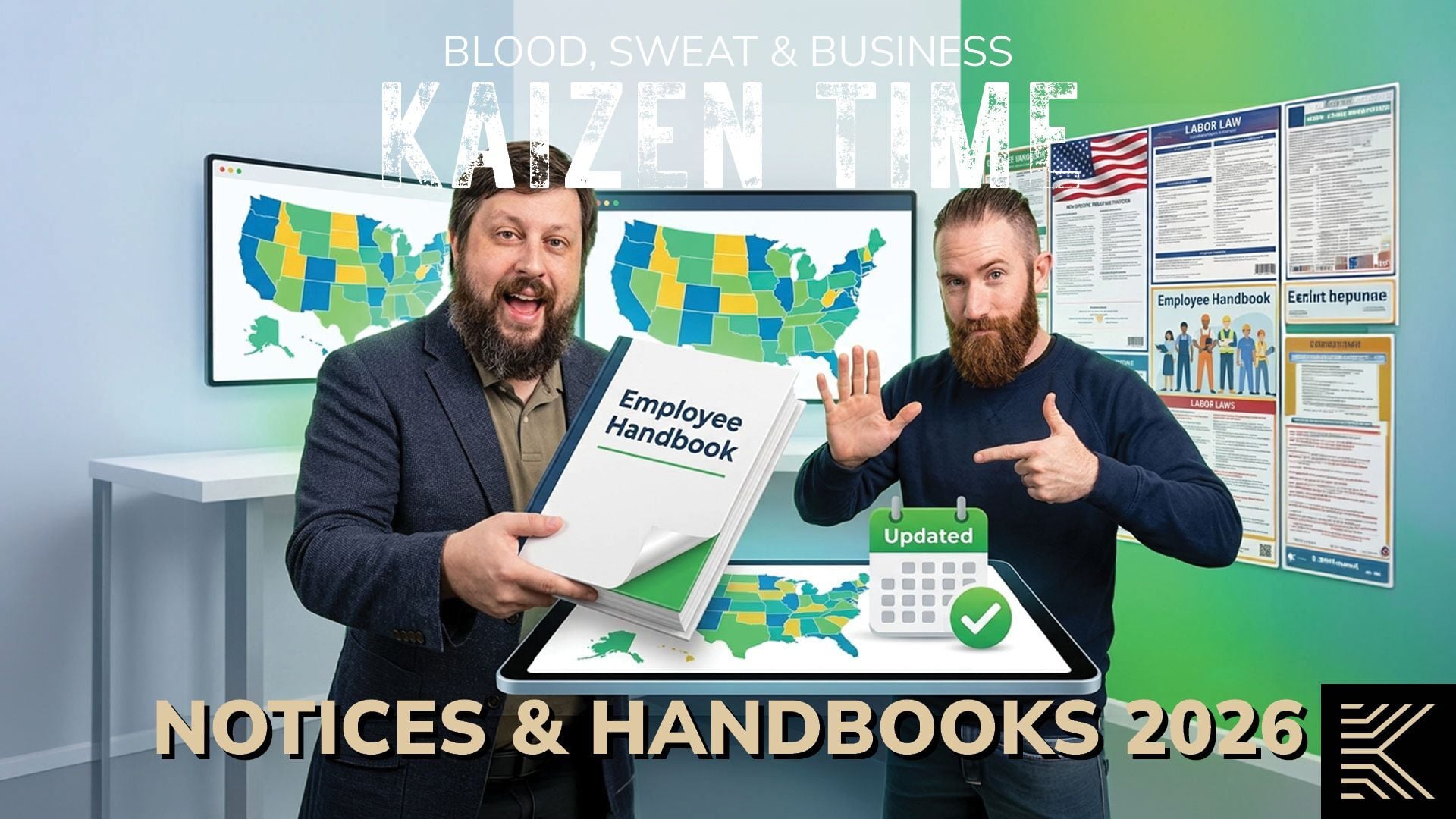
Employee handbooks and the posters in the break room get lumped together a lot. Paperwork. Compliance stuff. Something you set up once and forget...