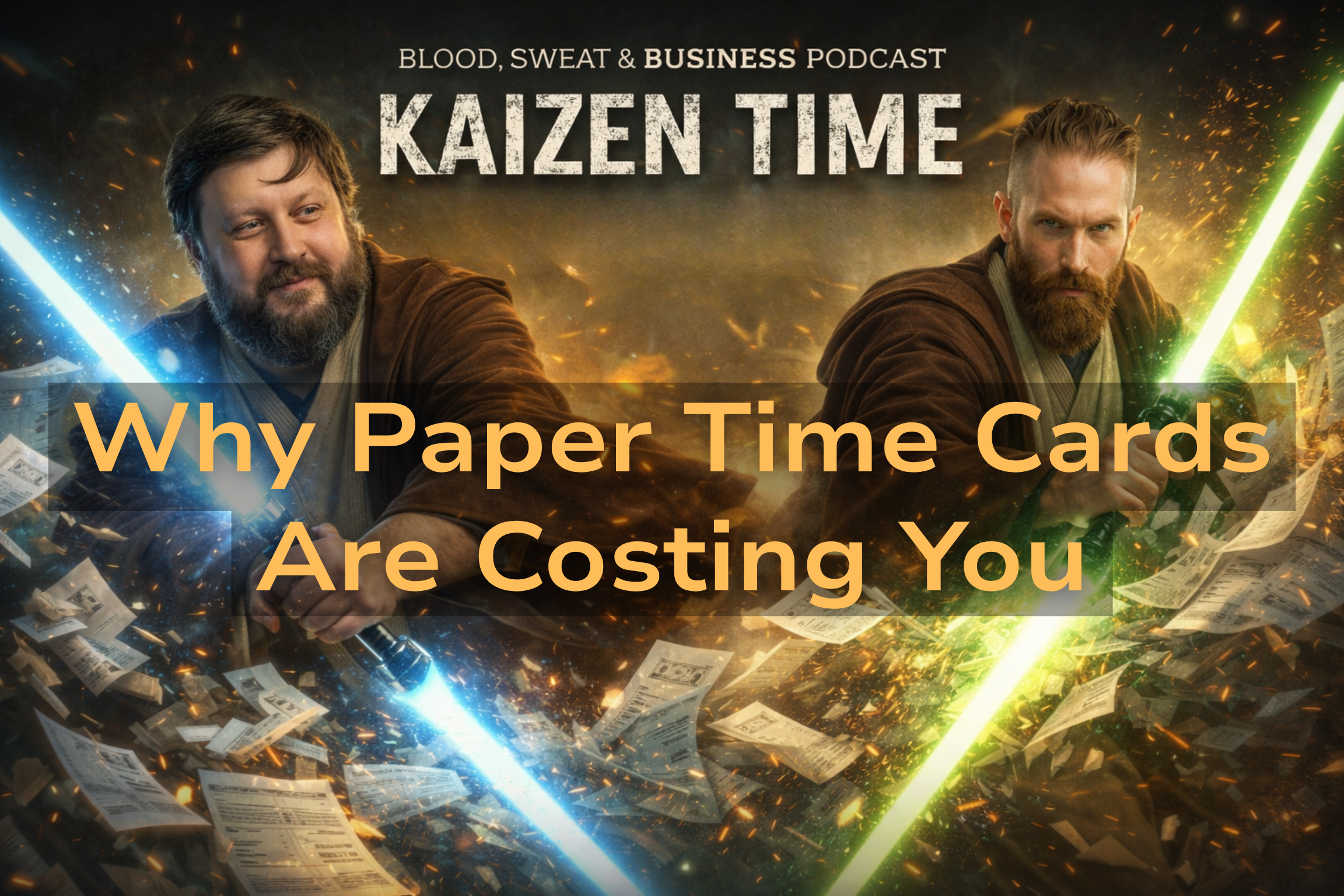
I am sitting here looking at a standard piece of 8.5 by 11-inch white paper. To most people, it is just a tool for notes. But in the world of payroll, if this is what you are using as a timecard, it is a ticking time bomb for your business.
Whether you are running an auto repair shop or a restaurant, hanging onto paper records isn’t just "old school." It is a massive risk. Here is why it is time to shred the paper and move your payroll into the modern era.
What You’ll Learn in This Post
- Why paper records are a "ticking time bomb" for labor law audits.
- The hidden cost of manual payroll entry and how it drains your weekly productivity.
- How to protect your team from phishing attacks by securing your time-tracking data.
- The specific digital tools that prevent "buddy punching" and ensure accurate overtime pay.
The "Dirty" Reality of Manual Entry
If you are in the auto industry, you know exactly what I am talking about. At the end of a busy week, you gather up those paper scraps from the techs. They are often covered in dirt, and the handwriting is sometimes impossible to read.
When you are rushing to get payroll in, a simple smudge can lead to major headaches:
- The Error Loop: You might enter 42 hours instead of 40 because of bad handwriting. Now you have to make up for that overpayment on the next check.
- Underpayment Crisis: If you underpaid a tech because of a manual error, you have to write a second check immediately to cover their overtime.
- The Bank Deadline: If the bank is closed when you find the error, you have an employee who cannot get their money and is rightfully mad at you.
- Triple Damages: If you show a pattern of not paying correctly, the Department of Labor can come after you. In some states, you could end up paying triple for damages because of those missing wages.
The Flat Rate and Overtime Trap
Many shops we talk to use flat rate or commission pay. You might think you do not need to track hours because you pay by the job. That is a dangerous misconception.
Even if your tech makes $1,400 a week, if they physically worked 81 hours and you aren't tracking that or paying overtime, you are in violation of labor laws. You are legally required to track hours to prove you met minimum wage and overtime standards for compliance. Using paper to figure all this out is incredibly time-consuming and leaves you vulnerable if the Department of Labor "opens the box" on your records.
Stop gambling with your compliance. See how our integrated payroll can work for your business. →
Security: Paper is a Phishing Magnet
We do not talk about this enough. Security. A paper timesheet often has a first and last name, and it might even have the name of your payroll company on it.
If that paper is floating around, it is a goldmine for "spear-phishing". Someone can use that specific info to trick your employees into giving up more sensitive data. Moving to a digital system removes that physical trail and is the best way to protect yourself and your team.
Stop Wasting Your Most Valuable Asset: Time
I have a client who pays a lot of 1099 contractors who work irregular hours. They were manually taking data out of their systems and using pivot tables to manipulate it before entering it into payroll.
By integrating their proprietary system directly into our payroll tools, we save them at least an hour every single payroll cycle. If you had an extra hour and a half every payroll, you would be in much better shape. Digital payroll offers features that paper simply cannot match:
- Automated Audit Trails: If a tech forgets to punch out, they submit a missing punch request. I can look at it on my phone, accept it, and it flows right into payroll with a clear audit trail.
- Geofencing and WiFi Verification: You can require employees to be in the area or logged onto the shop WiFi to punch in. They aren't punching in from home.
- Streamlined Handoffs: Most systems let employees punch in using their phone apps with Face ID. The data goes straight from one computer system to another—no manual steps required.
The Bottom Line
Once the Department of Labor, the IRS, or the state opens your records, they don't just look at one check; they look at everything. Do you even remember what you wrote in your books three months ago?
Paper is an invitation for an auditor to find more problems. Digital integration is about protecting your business, keeping your employees happy, and winning your time back.
 Brian Bride