 Clay Hamlin
How Auto Repair Shops Can Use AI to Boost Profits and Efficiency
AI in the shop can sound like a robot running the front counter. But that’s not where the value is right now, and it probably isn’t where it should...
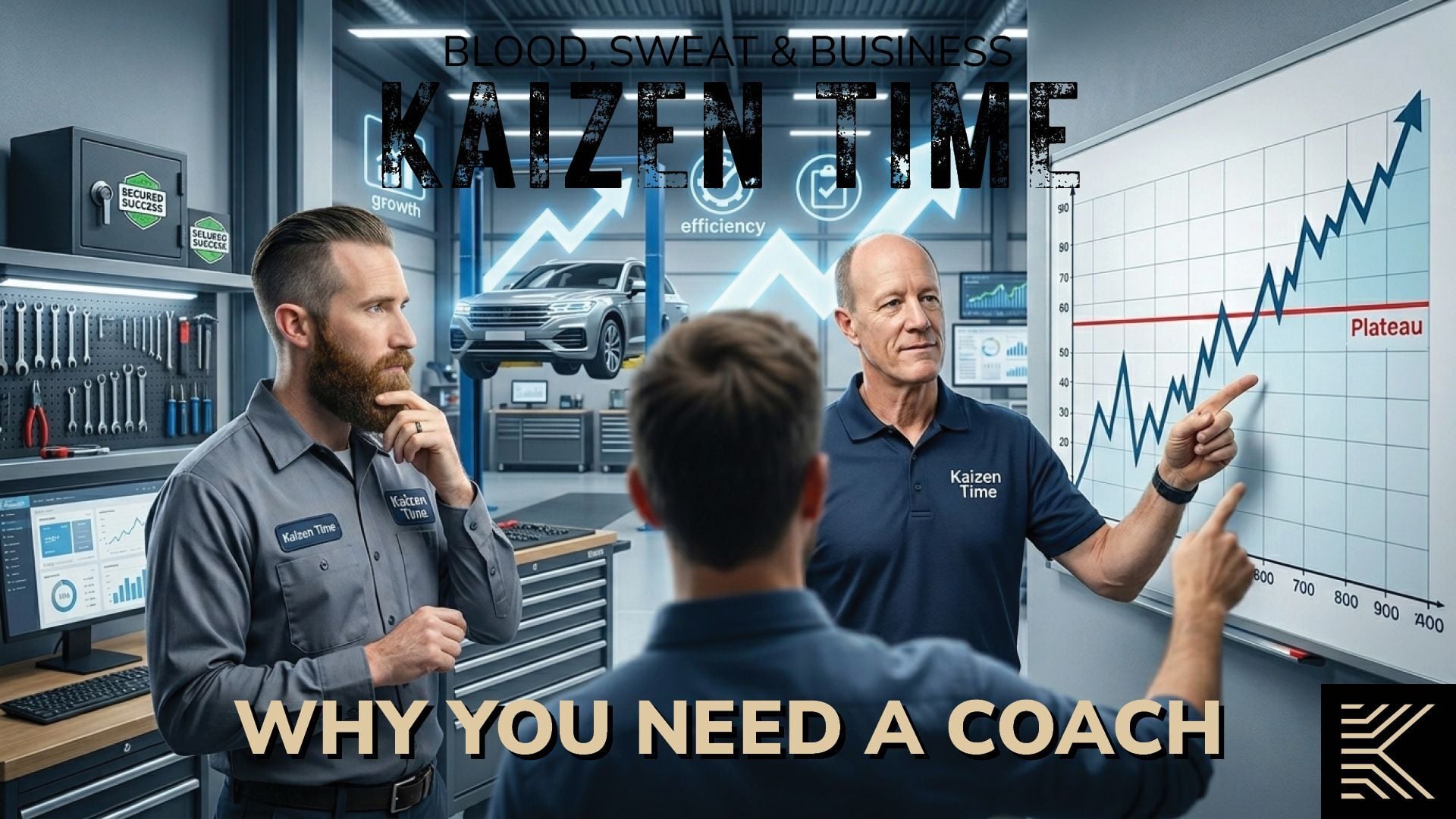
I played hockey growing up, and every team I was on had a coach. That coach never played in games. He wasn't scoring goals or making the big save. But everyone on the team knew he was a big part of the reason we got better.
The same pattern shows up in business, and it took me a while to really appreciate why. When you're running an auto repair shop, you're close enough to the day-to-day that it becomes hard to see the big picture. Cars are moving through the bays, decisions are getting made, and there isn't much time to step back and ask whether any of it is working the way you think it is.
That's where a coach comes in. In my experience, the highest-performing businesses, including auto repair shops, almost always have one.
High-performing businesses, including auto repair shops, tend to work with a coach at some point in their growth.
It's not unusual to see a shop's profit increase by 300% or more with the right coaching and changes in place.
A coach's biggest value is accountability. It's difficult to hold yourself to a standard when no one outside the business is checking.
Most coaches bill monthly or quarterly, with fees that vary based on the coach's experience, the scope of the engagement, and the industry.
A coach with direct experience in your industry understands your challenges a generalist coach doesn't.
Coaching costs more than the invoice. Time, effort, and a willingness to sit with uncomfortable decisions are part of the investment too.
If you can't find a coach specific to your industry, general frameworks like EOS are a solid starting point.
Go back to the hockey analogy for a second. The coach isn't on the ice, but that doesn't mean he isn't involved. During a game, he's deciding who plays and when, based on who's actually performing. If a talented player is coasting instead of playing up to their ability, that player sits on the bench until they've earned their way back in.
A business coach helps you work the same way. They're not in your shop day to day, watching over your shoulder. But they set expectations upfront, check in on progress, and hold you to a level of performance you might not hold yourself to. That includes helping you figure out what a worthy goal actually looks like in the first place.
If you tell your coach you're planning to grow revenue by five percent this year, a good one won't just nod along. They'll ask what the top performers in your market or your industry are doing, and whether five percent is actually the right target or just a comfortable one.
That kind of pressure-testing matters because growth rarely happens in a straight line. A coach helps you set goals that account for the plateaus and setbacks, not just the best-case scenario.
Some owners will say their spouse holds them accountable. That's fair to a point, but a spouse who isn't in the business every day isn't really in a position to check progress against specific goals the same way a coach is. In a business setting, holding yourself accountable is genuinely difficult, and that's true no matter how disciplined you are.
A good coach puts your actual results next to what you said you were going to do, and asks the question directly: Is this really what you were trying to accomplish? For a business owner who already knows the answer but hasn't wanted to look at it too closely, that question can be uncomfortable. It's also usually the most useful part of the relationship.
There's a real difference between being in the game and coaching from outside it. When you're running the shop, you're in the weeds. You're dealing with staffing, customers, and whatever broke down that morning. A coach isn't carrying any of that, which means they can see patterns and blind spots you're too close to notice.
That shift, from working in the shop to working on it, is exactly what let one shop owner move past a growth plateau once he or she stepped out of the bay or the service desk and started leading instead.
This blind spot isn't a reflection on the owner. It tends to show up at a specific, fairly predictable point in a shop's growth, once the business has scaled past what one person can manage internally.
The analogy does break down in one important way. In hockey, a player can't fire the coach. In business, the owner can. That changes the relationship a little, but it doesn't change where the accountability ultimately sits. The business owner is still the one who has to act on what the coach points out.
Not all coaches are the same, and the difference usually comes down to whether they understand your industry specifically. A coach who works with auto repair shops knows what the metrics should look like, what the common blind spots are, and what growth actually requires operationally, not just financially. The Institute is one of the coaching organizations built specifically around auto repair shops, and one I have personally worked with.
There's also real value in working with someone who has personally walked the path you're trying to walk. A coach who has helped a business make a similar jump, whether that's adding a second location, scaling staff, or working through rapid growth, understands what that transition demands in a way a generalist simply won't. In a lot of ways, you're paying for their experience as much as their advice.
Most business coaches charge monthly or quarterly, with fees that vary based on the coach's experience and the scope of the engagement. They're generally not there every day. Instead, you set goals upfront and check in periodically to track progress and get pushed on your thinking.
Compared to what that kind of guidance can help unlock, the fee tends to be modest. It's not unusual to see a shop move from $30,000, $40,000, or $50,000 a year in profit to $200,000 with the right changes in place. When the potential upside is that large, the cost tends to look like a reasonable investment rather than an expense.
Money is the easiest part of coaching to measure, but it isn't the only cost. Coaching also asks something of you: a willingness to change what isn't working, even when it's uncomfortable. That might mean letting go of a friend who isn't performing or recognizing that some of what's holding the shop back traces back to a choice you made as the owner.
But with those changes comes the opportunity for real upside, and not just for the owner's paycheck. A shop running on a one or two percent margin is fragile. One bad year can be the end of it. A shop that's meaningfully more profitable is more stable for everyone working there, not just the person who owns it. From an employee's perspective, that stability is worth something too.
That's the trade being weighed here: real discomfort now, for a real shot at a dramatically stronger bottom line.
None of that accountability or upside means much if the coach isn't the right fit in the first place.
If you're in auto repair, start by looking for a coach who works specifically within the industry. Organizations like The Institute and ATI (and several others) are built specifically around auto repair shops, and they tend to be set up to help owners make progress quickly because they already understand the business model.
If none of those feels like the right fit, general-business framework coaches like EOS or the leadership work associated with Patrick Lencioni are a solid starting point. They won't be tailored to auto repair the way an industry coach would, but they give you structure, and structure is usually a good place to begin for any growing business.
Whichever route you take, the goal a coach should be pushing you toward is profitable growth, not just bigger growth. More revenue only helps if your systems and margins can actually support it.
Growth creates complexity fast, and a good coach will push you toward better goals and hold you to them. But those conversations work best when they're backed by numbers you actually trust.
If you're working with a coach, or thinking about it, and want your financials to hold up their end of that conversation, let's talk about how Kaizen can help.

Why Business Growth Isn't Linear (and What Actually Happens Instead)
When Bigger Isn't Better: What Smart Growth Really Looks Like
How Al Oramas Grew His Auto Repair Shop by Stepping Out of the Bay
Kaizen CPAs works with auto repair shops across the country. We know running a successful shop takes more than keeping the bays full. We help shop owners understand their numbers, stay ahead of taxes, and build stronger, more profitable businesses. Auto repair is at the heart of what we do, but we bring the same practical, hands-on approach to businesses in other industries, too.
YPD HCM is part of the Kaizen CPAs family. YPD HCM helps small businesses manage payroll, HR, and compliance with the right tools and personal, human support—from payroll and tax filings to onboarding, employee management, and more. It’s practical help for the people side of your business, from a team that’s there when you need them.
The information in this article is provided for general educational purposes and reflects conditions as of the publication date. It is not legal, tax, accounting, payroll, HR, or compliance advice. Every business is different, so talk with a qualified professional about your specific situation.

AI in the shop can sound like a robot running the front counter. But that’s not where the value is right now, and it probably isn’t where it should...

Every pay period, payroll comes due, and a lot of shop owners treat that number like any other bill. They see it, they pay it, and they move on...
Employee handbooks and the posters in the break room get lumped together a lot. Paperwork. Compliance stuff. Something you set up once and forget...