 Brian Bride
5 Benefits of HCM and Payroll Software for Small Businesses
A single payroll mistake can turn into a rough week fast. Someone gets shorted on their check, they come to you upset, and now you're...

If you own a business, you already know that keeping up with payroll laws can feel like a full-time job. And just when you think you’ve got everything set, the rules change again.
On July 1, 2024, the Department of Labor (DOL) adjusted the Fair Labor Standards Act (FLSA) salary threshold for overtime eligibility. And here’s the kicker: this isn’t a one-time update. The threshold changes every July 1, so another update is coming in 2025.
If you haven’t checked your payroll and employee classifications yet, now is the time. Let’s break it all down in plain English—no legal jargon.
The DOL increased the salary threshold for exempt employees to $43,888 per year.
If an employee earns less than this amount, even if they’re salaried, they must be paid overtime for any hours worked over 40 in a week.
Example:
Let’s say you have a salaried employee making $40,000 per year. They work 45 hours in a week.
Besides the obvious (it’s the law), failing to adjust your payroll can lead to hefty fines, employee lawsuits, and a whole lot of stress. But beyond that, compliance is good for business.
Avoid costly penalties – Lawsuits and back pay claims can add up fast. It’s cheaper to get payroll right the first time.
Boost employee morale – No one likes working extra hours without proper pay. Fair wages build trust.
Improve retention – Competitive pay and transparent policies help keep your best employees around.
Protect your reputation – Word spreads fast when employees feel underpaid or overworked.
The bottom line? Following these updates isn’t just about avoiding fines—it’s about keeping your business running smoothly.
One of the biggest payroll mistakes businesses make is assuming salaried employees are exempt from overtime. Not true.
Here's a quick breakdown of the key differences between exempt and non-exempt employees, including the salary threshold that determines which category someone falls into.
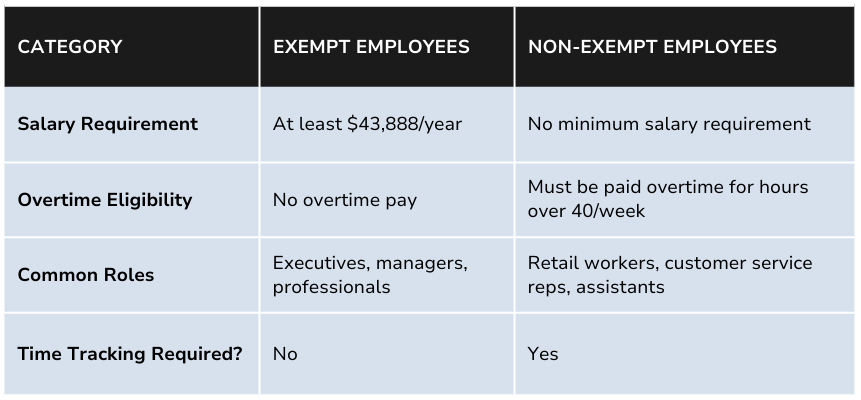
If an employee earns less than $43,888 per year or doesn’t meet the DOL’s job duties test, they are non-exempt and must be paid overtime.
Misclassification can lead to back pay claims, penalties, and lawsuits, so double-check before assuming an employee is exempt.
Even businesses with the best intentions can run into trouble with overtime compliance. Here are some common pitfalls to watch out for:
Misclassifying Employees – Titles don’t determine exemption status; salary and job duties do.
Skipping Time Tracking for Salaried, Non-Exempt Employees – If they’re below the threshold, you must track their hours.
Forgetting to Include Bonuses & Commissions in Overtime Pay – Some extra earnings count toward the overtime rate.
Ignoring State Laws – Some states have stricter rules than federal law. Check local wage laws, too.
Following labor laws doesn’t have to be a headache. Here’s how to stay compliant with minimal stress:
Since the salary threshold changes every July 1, reviewing employee salaries and classifications mid-year keeps you ahead of any adjustments. If you have employees close to the threshold, consider:
Non-exempt employees must have their hours recorded properly—no more estimating or paper timesheets. A payroll system with built-in time tracking eliminates errors and ensures compliance.
The right payroll platform takes the guesswork out of overtime compliance.
The DOL updates the salary threshold every year. That means another change is coming on July 1, 2025. While we don’t yet know the exact number, planning ahead ensures no surprises when the next update rolls around.
Review all salaried employees' earnings to determine if they need reclassification.
Ensure accurate time tracking for all non-exempt employees.
Update payroll systems to calculate overtime correctly.
Check state laws for additional wage and overtime requirements.
Use a payroll platform to automate compliance.
Overtime rules change every year, and getting caught off guard costs more than the back pay. Fines, lawsuits, and lost trust with your team all add up fast. YPD HCM gives you the support to stay compliant without having to become a payroll expert yourself.

Kaizen CPAs works with auto repair shops across the country. We know running a successful shop takes more than keeping the bays full. We help shop owners understand their numbers, stay ahead of taxes, and build stronger, more profitable businesses. Auto repair is at the heart of what we do, but we bring the same practical, hands-on approach to businesses in other industries, too.
YPD HCM is part of the Kaizen CPAs family. YPD HCM helps small businesses manage payroll, HR, and compliance with the right tools and personal, human support—from payroll and tax filings to onboarding, employee management, and more. It’s practical help for the people side of your business, from a team that’s there when you need them.
The information in this article is provided for general educational purposes and reflects conditions as of the publication date. It is not legal, tax, accounting, payroll, HR, or compliance advice. Every business is different, so talk with a qualified professional about your specific situation.

A single payroll mistake can turn into a rough week fast. Someone gets shorted on their check, they come to you upset, and now you're...

The four-day workweek has become one of the most talked-about workplace shifts of the last decade. Large corporations are experimenting with it....

We've all seen the headlines. Another major company announces that everyone needs to be back at their desk. No exceptions. And if you're running a...